MERIMEE, Prosper (1803-1870). French Writer, author of Carmen.
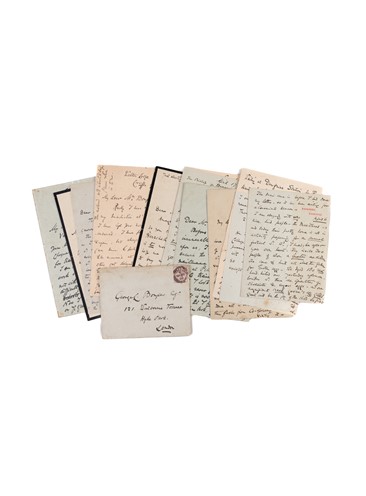
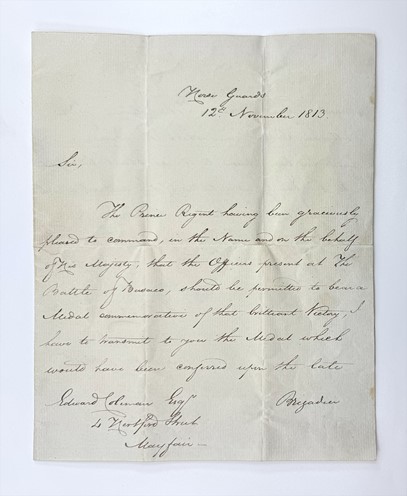
Autograph Letter Signed ("Pr. Mérimée") to the French naturalist Henry Milne-Edwards, asking his advice on moving part of the British Museum's collection on behalf of Mr. Panizzi, the Director.
1 page 4to in French, n.p., n.d. [annotated, probably
A fascinating letter about the attempts by the British Museum to find space for all its collections.
Trans: "Mr. Panizzi d[irecto]r of the British Museum has asked me to ask Mister Milne Edwards if he would be good enough to give him his opinion on a matter which is at present controversial. The British Museum has become too small for its collections. There can be no question of moving the books after the construction of the great rotunda. It is necessary to separate the books from either the natural history collection or the antiquities. But which of these two types of collections are to be sent elsewhere? If Mister M. Edwards would like to spare himself the trouble of writing to Mr. Panizzi, he could give me his opinion in person."

Sir Anthony Panizzi, forced into exile from his native Italy, became a British citizen in 1832, and achieved fame as the Principal Librarian at the British Museum. It was during his tenureship that work commenced on the British Library catalogue, but his greatest achievement was certainly the building of the famous Reading Room, completed in 1857. He retired in June 1866, and it is therefore unlikely that the pencilled date of July 1866 is correct.
Mérimée, writer, civil servant and close friend of Napoleon III and the Empress Eugénie, was also an archeologist of some note. Panizzi and Mérimée became close friends, and their association with their respective political establishments meant that they were, allegedly, able to sometimes act as an unofficial diplomatic conduit.
Henry Milne Edwards, the French-born son of an English father, was a celebrated zoologist and naturalist. In 1841, he was appointed Professor of Entomology, and later Zoology, at the Museum of Natural History in Paris. Panizzi was therefore about to receive the benefit of advice from both an antiquarian and a naturalist concerning the collection. In the end, the natural history collection was moved in the 1880s to the site of the present Natural History Museum in South Kensington.
|